
Benefits of Hormone Therapy for Women
The Real Problem With Menopause
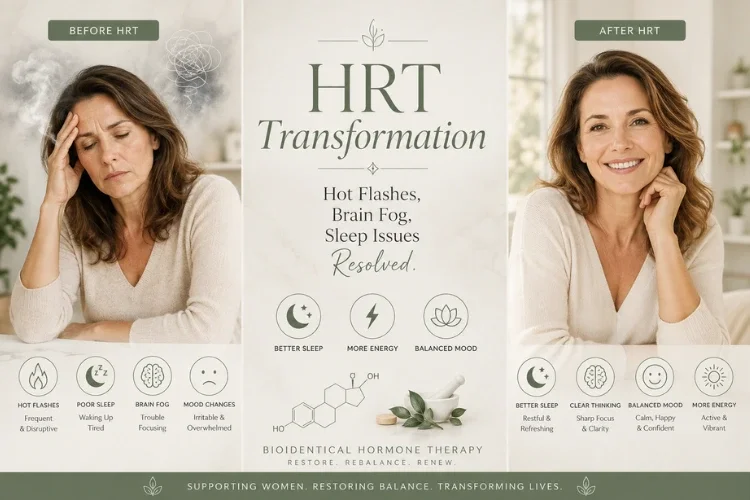
Hot flashes that interrupt your workday. Night sweats soaking through sheets. Brain fog that makes you forget what you're saying mid-sentence. A mood that doesn't match who you are. Sound familiar?
For decades, women were told to just power through. Suffer silently.
But here's what research actually shows: when hormonal decline is addressed properly, women don't just survive menopause, they reclaim their lives.
This guide covers what hormone therapy actually does, who benefits most, and whether it might be right for you. If you're tired of accepting "this is just menopause," keep reading.
What Hormone Therapy Actually Does
Hormone replacement therapy (HRT) supplements the estrogen and progesterone your body stops producing during menopause. It's not about recreating your hormones from your 30s. It's about restoring levels to a range that eliminates symptoms and supports your health.
Estrogen affects nearly every system in your body, your bones, heart, brain, skin, and mood. When levels drop, the effects ripple everywhere. HRT provides bioidentical hormones, which your body recognizes as identical to what it naturally produces. The key difference from older synthetic options is that bioidentical hormones have the exact molecular structure your ovaries once made, so your body doesn't treat them as foreign. This often means fewer side effects and better tolerance.
Which Symptoms Actually Improve
Not every menopause symptom responds equally to HRT. But these do:
Hot Flashes and Night Sweats
These are what HRT does best. Studies show 50-80% reduction in frequency and intensity for most women, often within weeks. If you're waking up drenched multiple times per night or having flashes interrupt your work, HRT is worth considering.
Brain Fog and Memory Issues
"I used to remember everything. Now I forget why I walked into a room." This is real and measurable. Estrogen affects cognition, and its decline creates noticeable changes in focus and recall. Hormone therapy supports improvements here, especially when combined with better sleep.
Sleep Disruption
Poor sleep during menopause comes from two sources: hot flashes interrupting you at night, and hormonal shifts affecting sleep architecture itself. Addressing the hot flashes often fixes the sleep problem, which then improves everything else, mood, energy, thinking.
Mood and Emotional Stability
Irritability that doesn't match your temperament. Anxiety that feels foreign. These changes are hormonal, not psychological. Estrogen influences serotonin and dopamine directly. Many women notice mood stabilization within weeks of starting therapy.
Vaginal Dryness and Sexual Comfort
As estrogen drops, vaginal tissue thins and dries. This causes discomfort, painful intercourse, and recurring urinary infections. Localized vaginal estrogen (creams, rings, tablets) works directly on these tissues with minimal systemic effects.
The Health Benefits Beyond Symptom Relief
Bone Health
Estrogen protects bone density. When it declines, bone loss accelerates, particularly in the first 5-8 years after menopause. This increases fracture risk. HRT slows this process significantly, reducing hip and spine fractures in women at risk.
Heart and Metabolic Health
Research shows that women who start HRT close to menopause (within 10 years) and are under 60 don't see increased cardiovascular risk. Some data suggests protective benefits. Timing matters here, your healthcare provider will evaluate your individual risk factors.
Quality of Life
This matters most. Women on HRT report restored energy, better ability to exercise, improved sexual function, stable mood, sound sleep, renewed confidence, and visibly healthier skin. These aren't small things. They're the fundamentals of living well. Many women also discover that stabilized hormones combined with proper skincare and aesthetic treatments create a synergistic effect—better sleep and mood mean better skin health, while treatments like microneedling and chemical peels can address any skin texture changes that occurred during hormonal fluctuations.
How Hormone Therapy Is Delivered
Different delivery methods work for different needs and preferences:
Oral Pills
The most common option, simple to take daily. Well-studied over decades with predictable results. The hormones pass through the liver before entering the bloodstream, which can slightly affect cholesterol levels. Good for women without liver issues or clotting concerns.
Patches, Gels, and Sprays
Applied directly to skin, these bypass the liver and go straight into your bloodstream. They provide steady hormone levels, fewer interactions with other medications, and lower blood clot risk compared to pills. Most are applied or changed weekly, with consistent dosing throughout.
Localized Vaginal Treatments
Creams, rings, or tablets placed directly in the vagina deliver estrogen where it's needed for dryness, painful intercourse, and urinary issues. Minimal amounts enter the bloodstream, making this option safer for some women who can't take systemic therapy.
Pellet Therapy
A small pellet containing bioidentical hormones is placed under the skin and releases steady hormone levels for 3-6 months. Convenient for those who prefer not to think about daily treatment, though it requires a minor procedure and the dosing is customized per person.
Who Should Consider HRT, Who Shouldn't
Good candidates:
Women within 10 years of menopause or under 60
Moderate to severe menopause symptoms
No contraindications to hormone therapy
Caution or avoidance:
Personal history of certain breast cancers
Current blood clots or history of stroke
Uncontrolled high blood pressure
Active liver disease
Even if you fall into the caution category, options like localized vaginal estrogen might still work for you. This isn't black and white, it's individual.
What to Expect
Timeline:
Weeks 1-2: Better sleep quality often improves first
Weeks 2-4: Hot flashes usually start decreasing
Weeks 4-8: Brain fog lifts, mood stabilizes, energy returns
Weeks 8-12: Peak benefits as your body adjusts
Most women see meaningful improvement within the first month.
Ongoing care: Regular follow-up appointments (6 weeks, 12 weeks, then annually) with lab work ensure your dosing stays optimized. Your provider will reassess whether you're still benefiting and make adjustments as needed.
The Concerns People Actually Have
"Will it cause weight gain?"
Menopause itself brings weight gain and metabolic shifts. HRT isn't a weight loss treatment, but some research suggests it helps reduce abdominal fat accumulation that happens with declining estrogen. Diet and exercise matter most, but HRT can support your ability to maintain healthy habits by restoring energy and mood.
"Doesn't HRT increase breast cancer risk?"
This is the question that concerns most women. The largest study showed combined therapy (estrogen plus progestin) carried a small increased risk, particularly with longer use. The absolute increase is small, roughly 8 additional cases per 10,000 women per year. Estrogen-only therapy (for women without a uterus) showed no increased risk. Your provider will discuss your individual risk factors in detail.
"Will I need it forever?"
No. Many women use HRT for 3-5 years to manage symptoms while passing through the most intense phase of menopause. Others continue longer. The decision is individual and reassessed annually.
"Is it safe at my age?"
Age alone isn't the factor. Timing relative to menopause is what matters. Women recently menopausal (within 10 years) and under 60 are generally good candidates. Starting well after menopause carries different considerations, which your provider will evaluate.
Common Questions Answered
How quickly do results appear?
Many notice better sleep within 1-2 weeks. Hot flashes typically decrease within 2-4 weeks. Peak improvements in mood, energy, and mental clarity usually develop over 8-12 weeks as your body adjusts.
Can I use HRT after a hysterectomy?
Yes. If you had your uterus removed but kept your ovaries, you can use estrogen-only therapy, which is often highly effective. If your ovaries were also removed, your provider will tailor treatment for the resulting hormonal changes.
What's the difference between HRT and bioidentical hormones?
All bioidentical hormones have molecular structures matching what your body naturally produces. HRT is the broader term for hormone therapy in general. Some older HRT formulations use synthetic or horse-derived hormones, which your body may recognize as different. Bioidentical options feel more natural to most women.
How often do I see my provider?
Standard practice includes visits at 6 weeks, 12 weeks, then annually. Your provider monitors how you're responding, adjusts dosing as needed, and checks lab work periodically to ensure you're in the right therapeutic range.
Why Professional Care Matters
The quality of your HRT experience depends on your provider's expertise. Skin Theory Aesthetics specializes in evidence-based hormone therapy with comprehensive assessment, personalized planning, conservative dosing, ongoing monitoring, and integration with aesthetic medicine to address your complete well-being.
The Bottom Line
Hormone therapy isn't a fix-all, but for many women experiencing moderate to severe menopause symptoms, it's genuinely transformative. The woman waking up four times per night finally sleeping through. The executive whose brain fog was costing her credibility finally thinking clearly again. The woman who lost interest in intimacy reconnecting with her partner.
These changes matter.
If you've been told to just accept menopause, or if you're unsure whether HRT is right for you, schedule a consultation to discuss your specific situation with a qualified provider.You deserve to feel like yourself again.
If you've been told to just accept menopause, or if you're unsure whether HRT is right for you, schedule a consultation to discuss your specific situation with a qualified provider.
You deserve to feel like yourself again.